Architectural Brief – Climate-Responsive Farmhouse, Bhakkar, Punjab
This farmhouse is specifically designed for the hot, dry, and sandy climate of Bhakkar, where temperatures rise rapidly and natural cooling is essential. The architecture integrates natural ventilation, evaporative cooling, and double-height airflow circulation to create a comfortable indoor environment without depending on mechanical systems.
1. Climate & Orientation
- The building is oriented to capture prevailing cool breezes and reduce heat gain.
- Openings are aligned for cross-ventilation, allowing fresh air to travel through all major spaces.
2. Water-Channel Cooling System
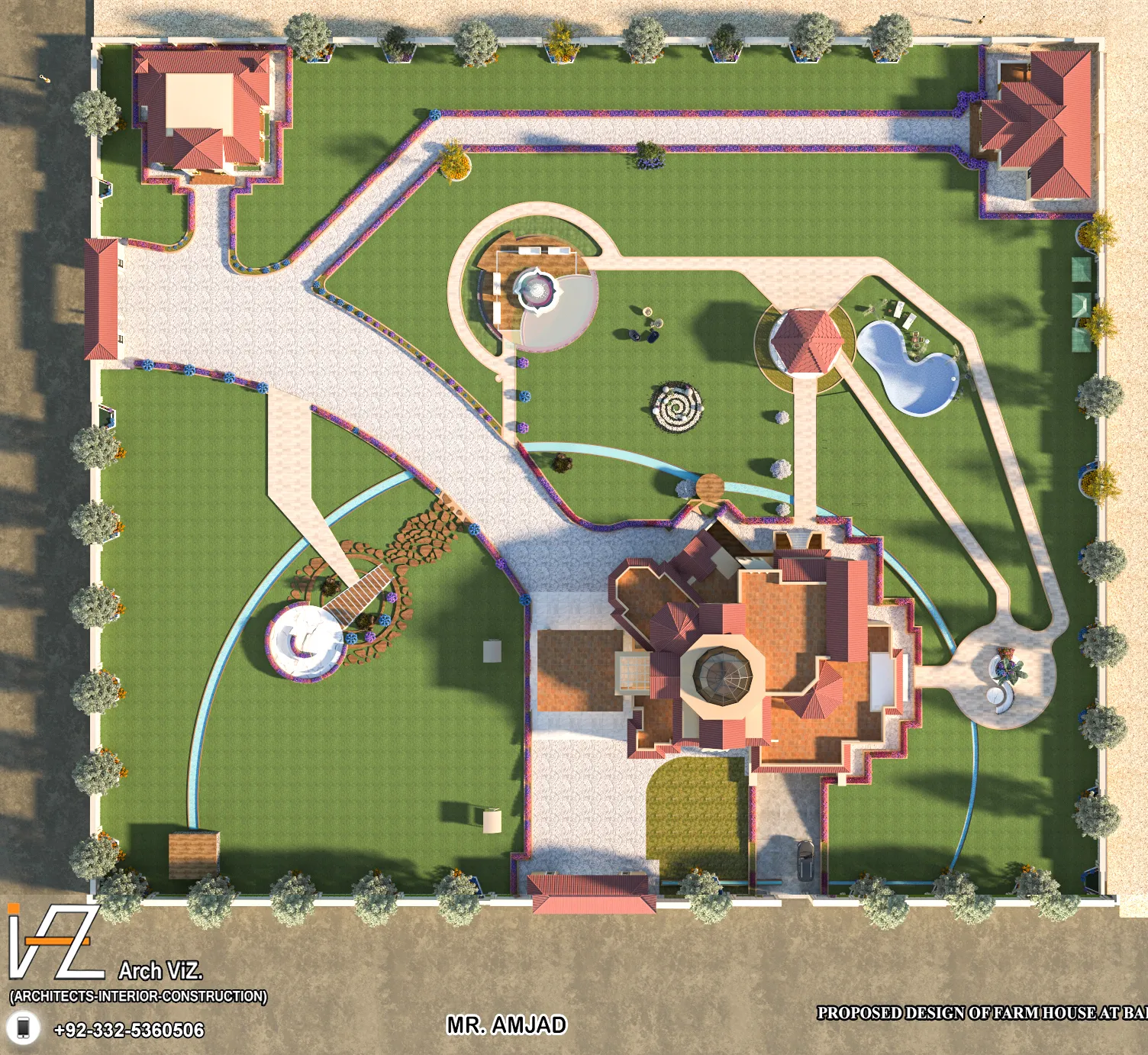
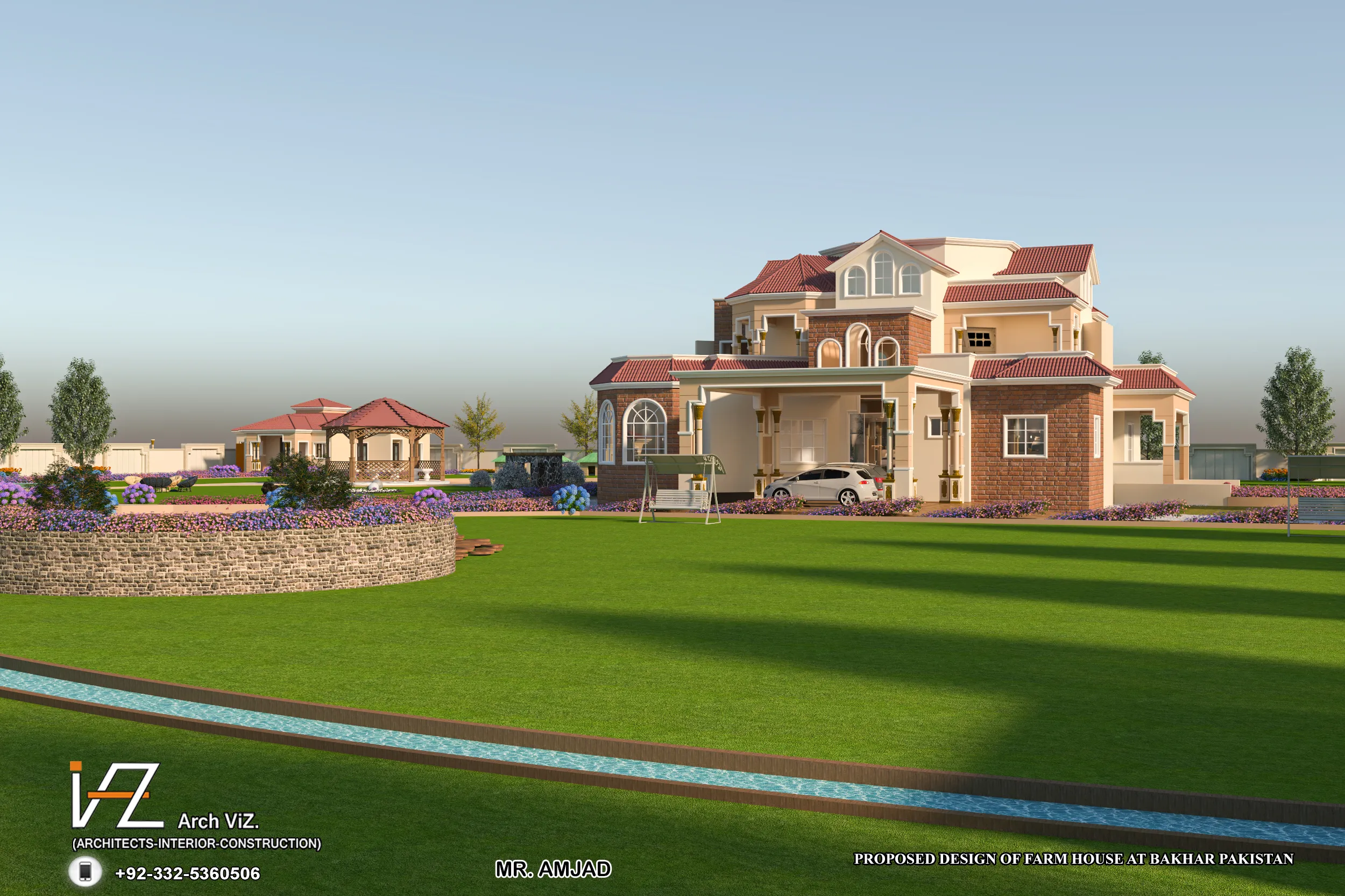
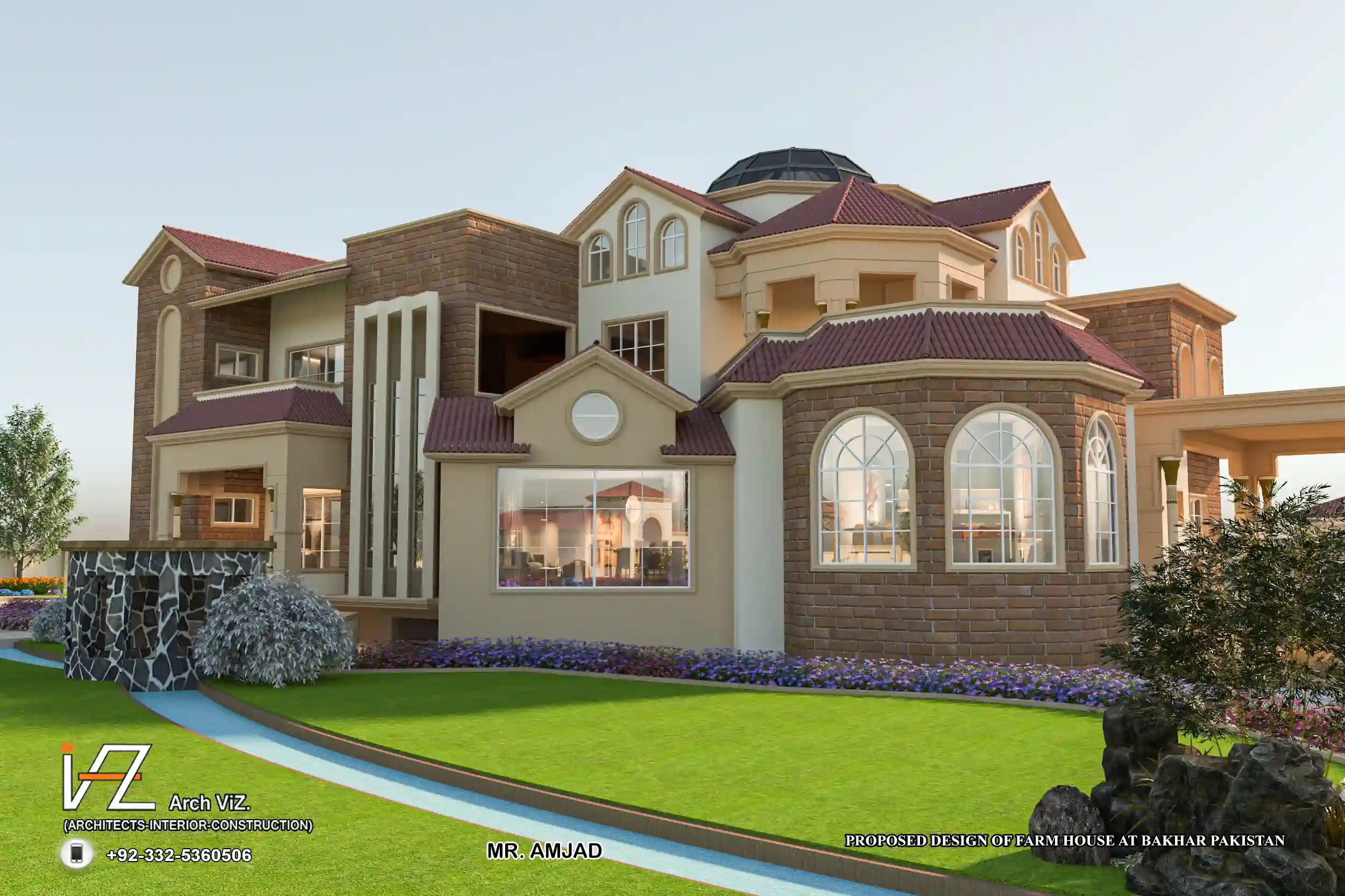
- A continuous water channel, fed by the tube-well, runs through the landscaped areas.
- As hot air moves across the water surface, it cools naturally by evaporation before entering the building.
- This system lowers indoor temperature and filters warm air into cooler, fresh airflow.
3. Double-Height Central Core
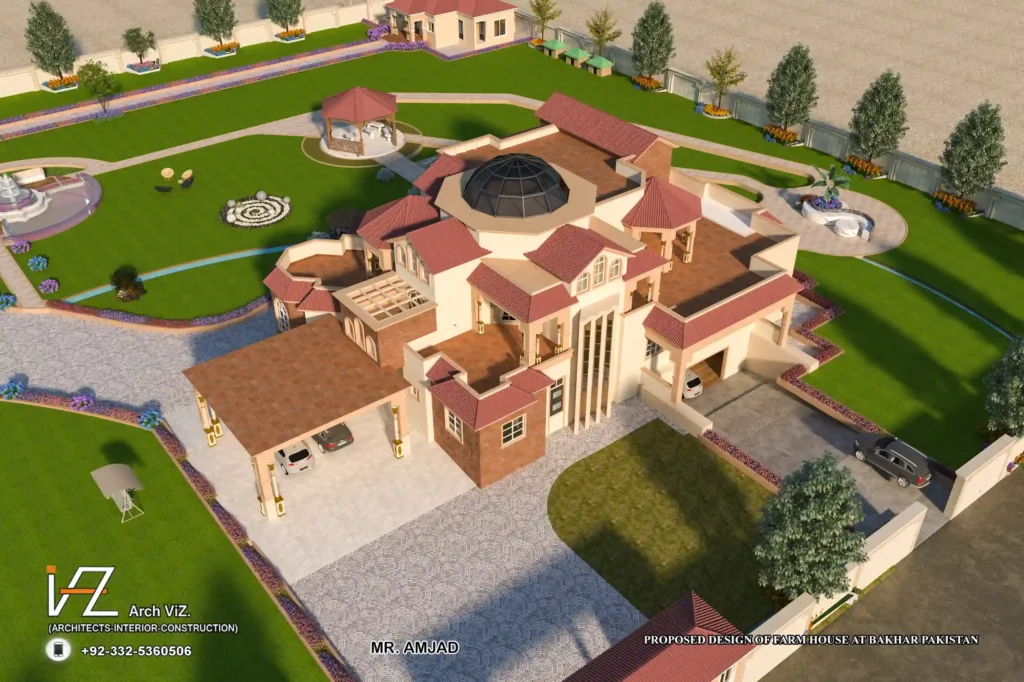
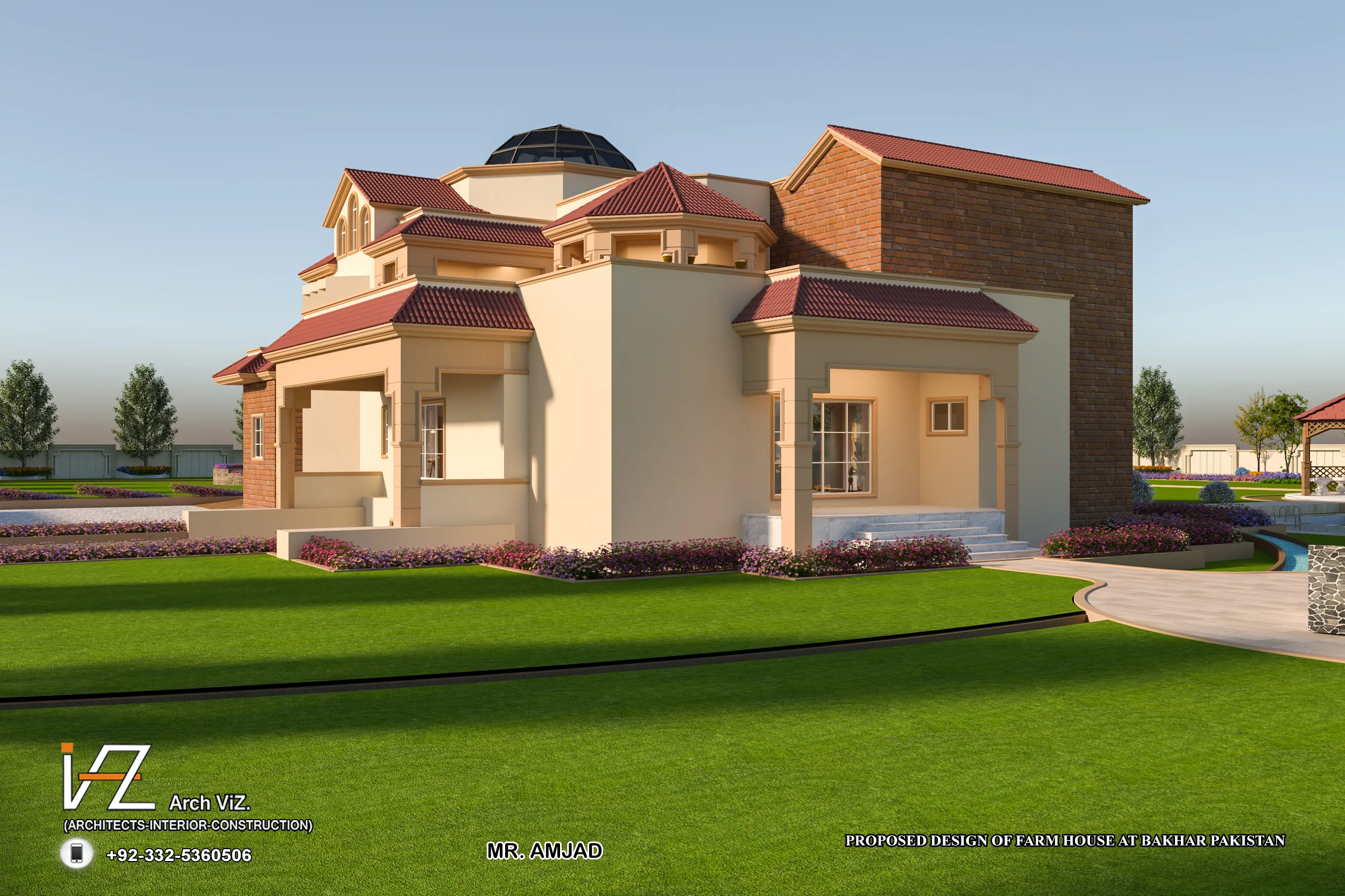
- The center of the farmhouse features a double-height atrium designed as a natural cooling chimney.
- Warm air rises and exits through upper-level vents.
- Cooler, water-cooled air is pulled in from the lower side openings, maintaining constant circulation.
4. Building Envelope & Materials
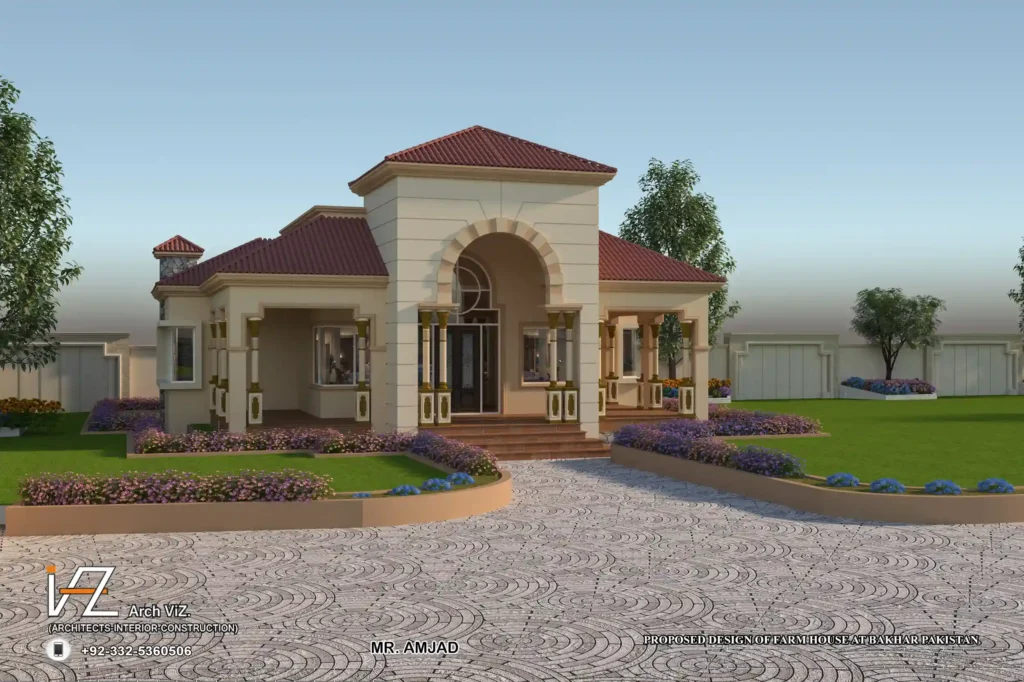
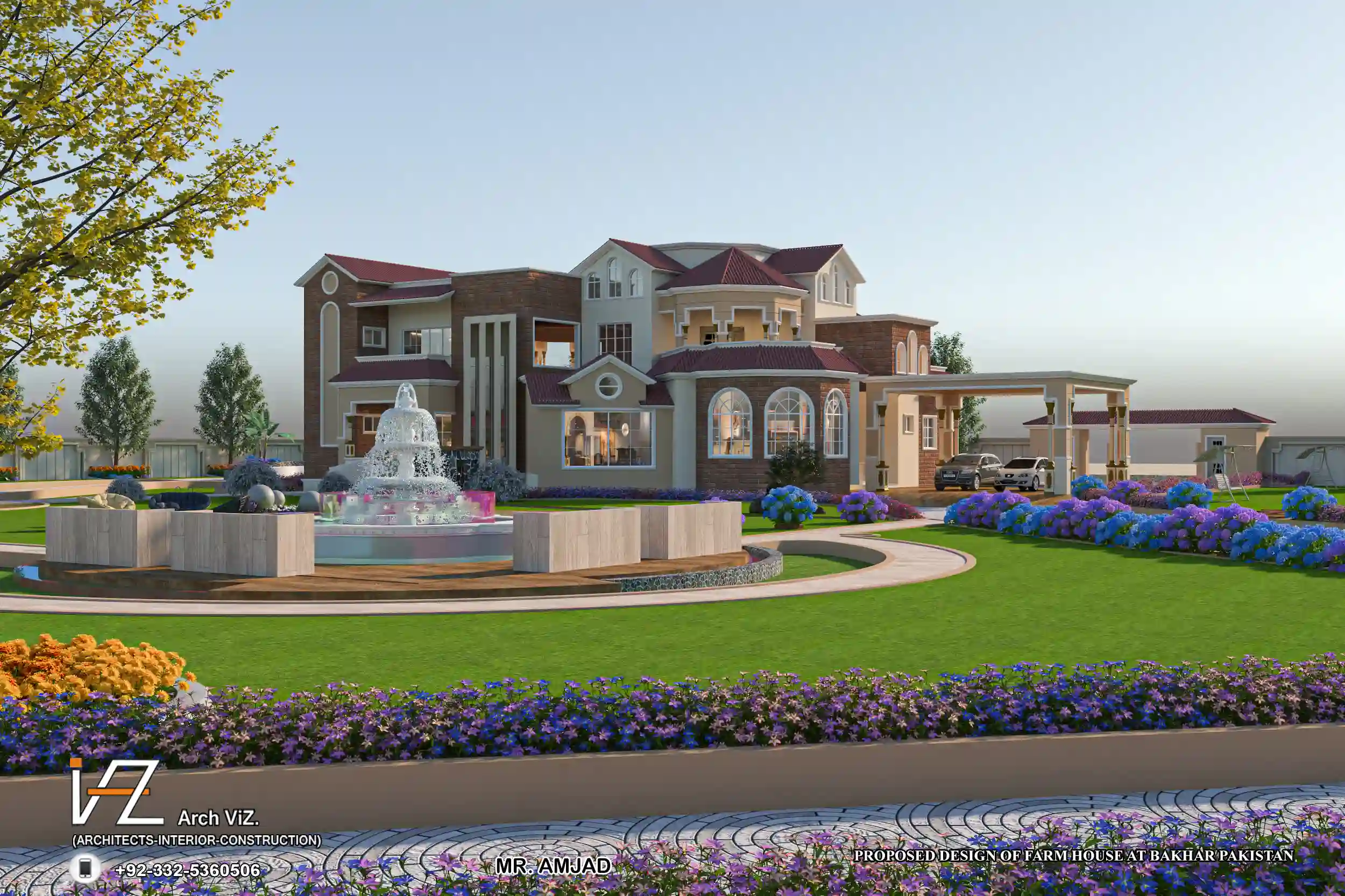
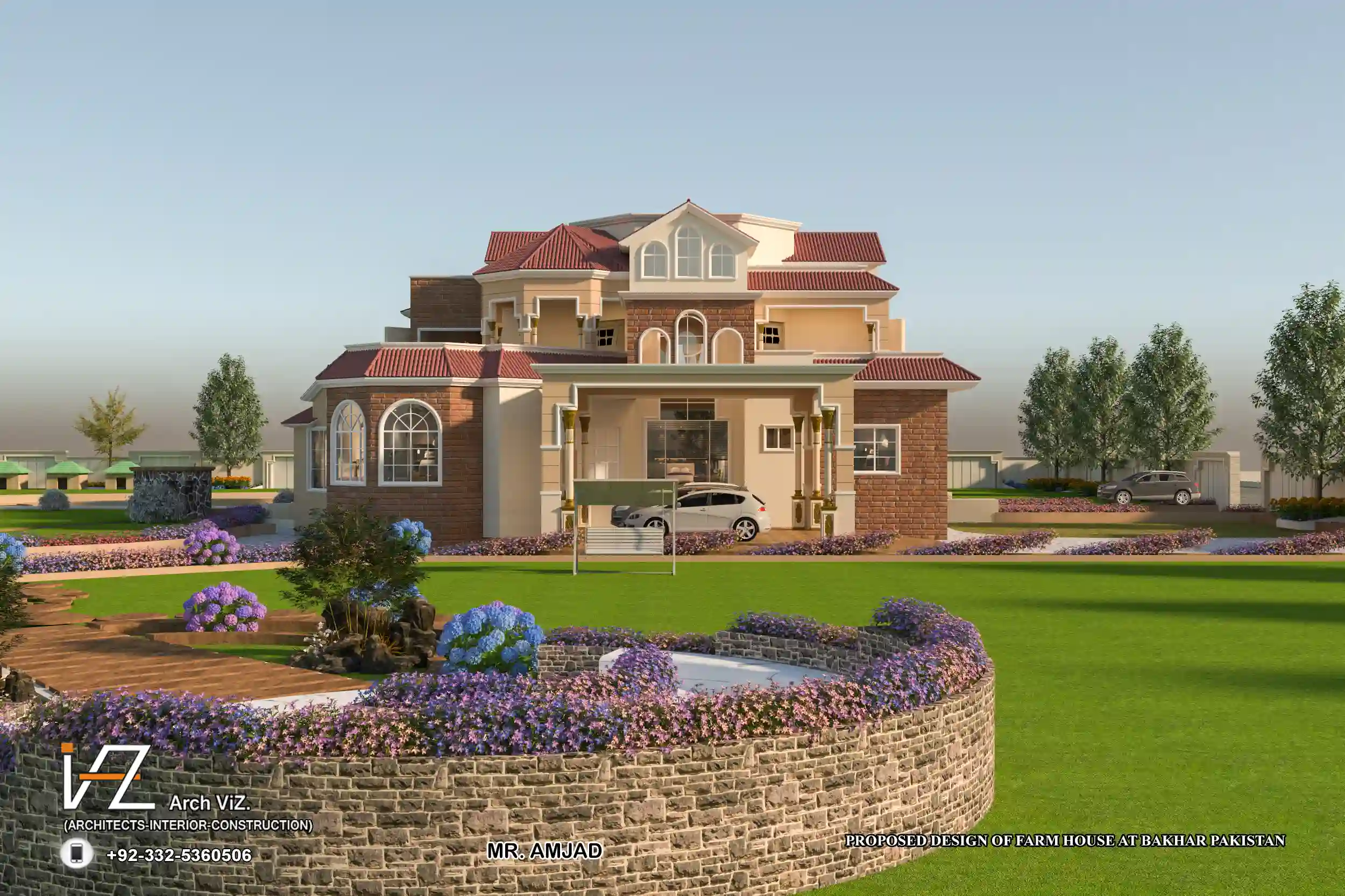
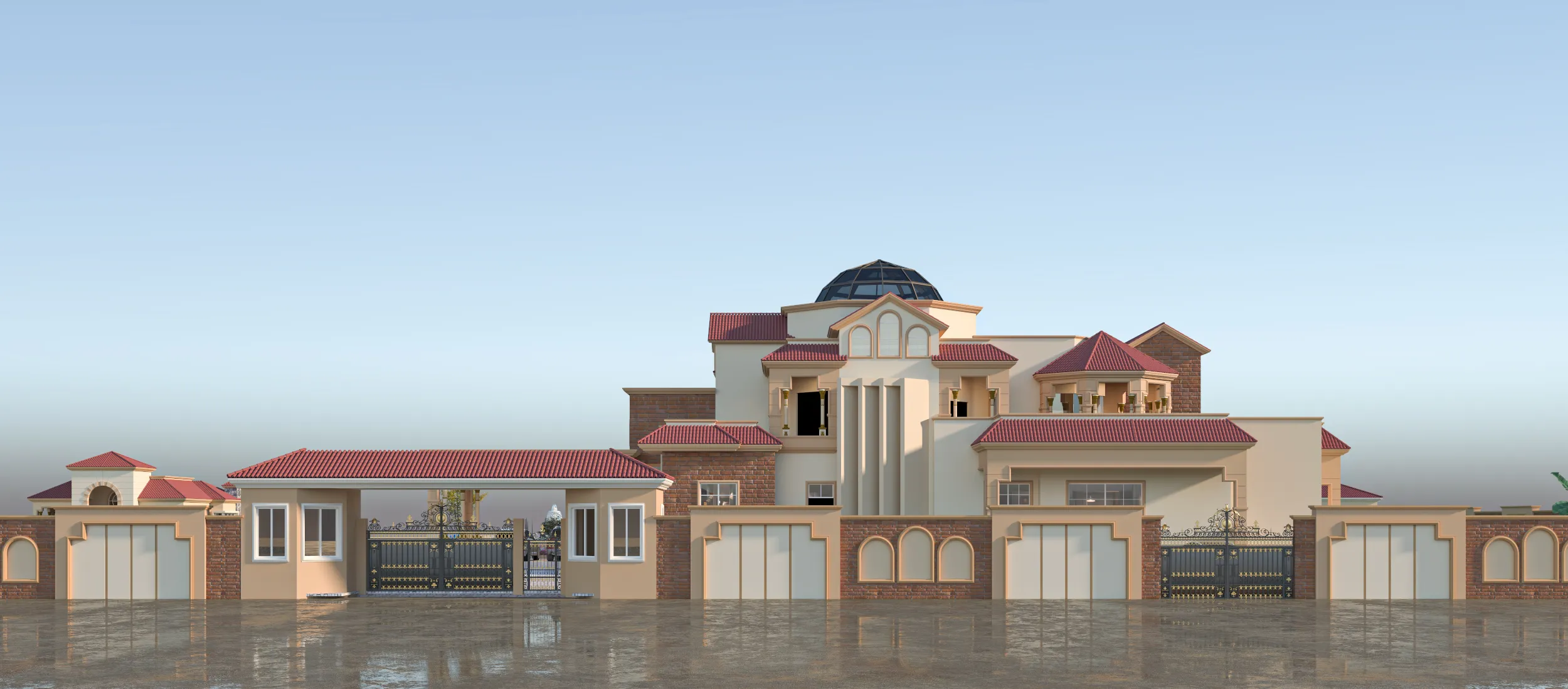
- Insulated walls, shaded verandas, deep overhangs, and reflective roofing reduce heat absorption.
- Light exterior tones and textured stonework enhance thermal comfort.
- Large, strategically placed windows allow daylight while minimizing heat gain.
5. Landscape–Architecture Integration
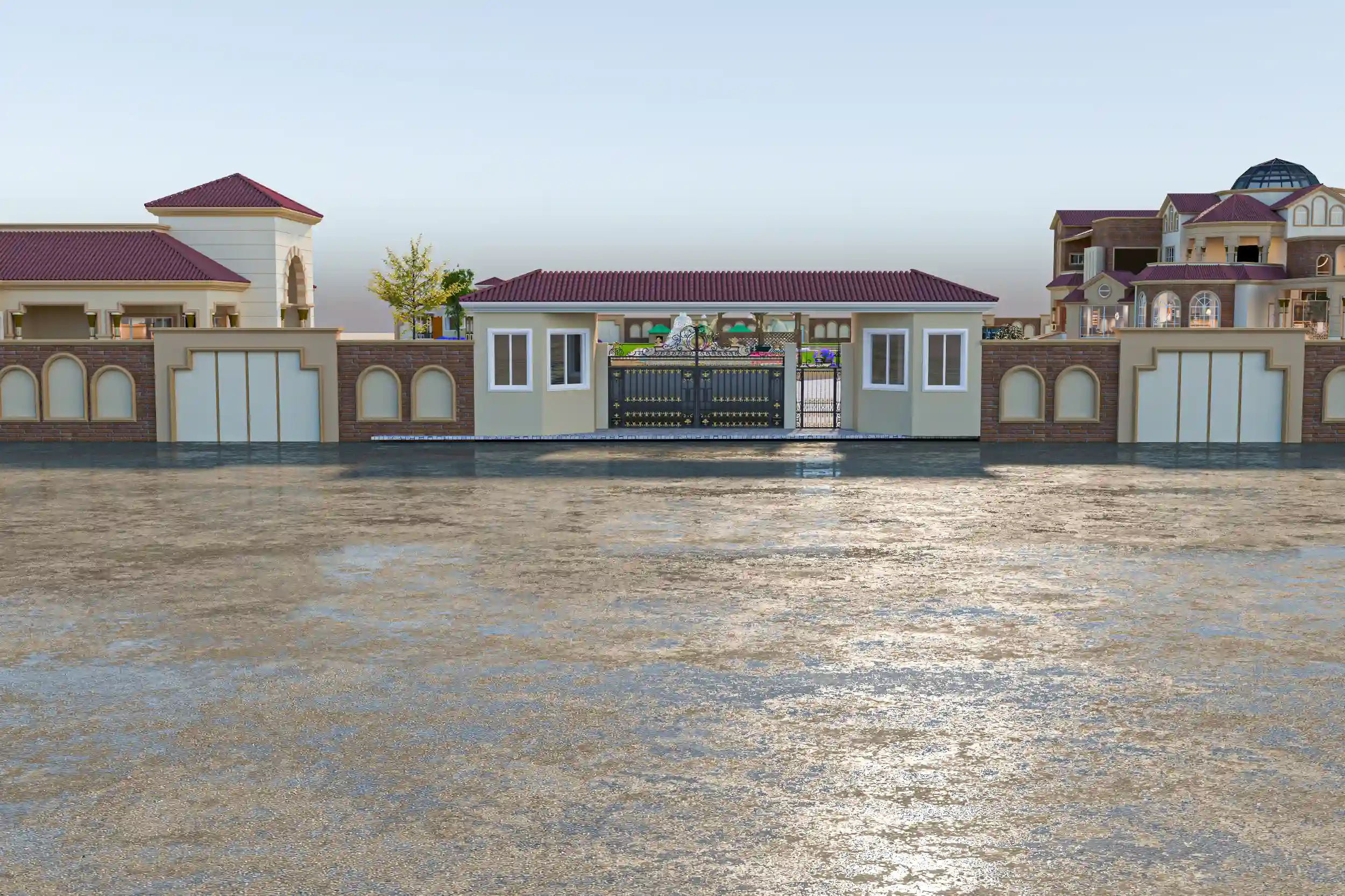
- The fountain, lawns, and dense plantation create a cool micro-environment around the house.
- Trees on sun-exposed sides (south/west) provide natural shading.
- Pathways and planting beds guide wind movement and support the natural cooling cycle.